More Resources
Princeton Review

American University

Contact Information:
4400 Massachusetts Ave, NW
Washington, DC 20016-8001
Phone: (202) 885-6000
Fax: (202) 885-1025
View Website

Request a Brochure
Previous Photo
Next Photo

American University Says...
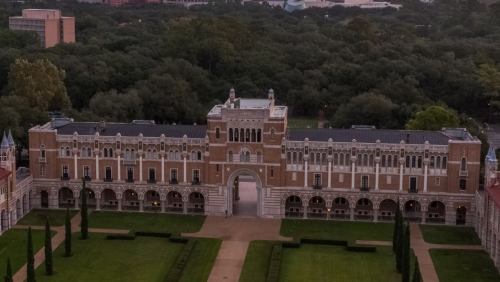
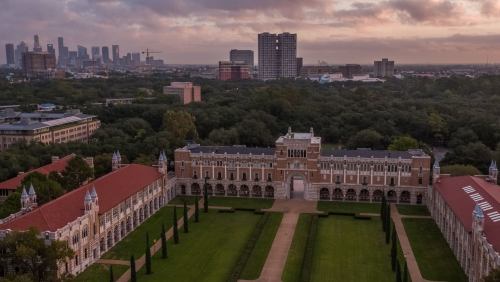
Founded in 1893, American University's 84-acre campus is located in the residential "Embassy Row" neighborhood in the northwest quadrant of Washington, D.C. Nestled among embassies and ambassadorial residences, AU's campus offers a safe, suburban environment with easy access via the Metrorail subway system to Washington's countless cultural destinations. A global center of government, Washington, D.C. stands unmatched in academic, professional and...
Read More
Statistics
Enrollment: 6311
Average SAT: 624
Average ACT: 28
Most Popular Majors: Business/Commerce, General,International Relations and Affairs,Mass Communication/Media Studies,
Regular Application Deadline: 01/15
Student Faculty Ratio: 13.5:1

Scholarships & Financial Aid
Undergraduate Receiving Need-Based Financial Aid: 151
Average Freshman Total Need-Based Gift Aid: $11,448.00

Rankings & Lists
Best Career Services
Great College Towns
Most Politically Active Students

School Says - General Information
Founded in 1893, American University's 84-acre campus is located in the residential "Embassy Row" neighborhood in the northwest quadrant of Washington, D.C. Nestled among embassies and ambassadorial residences, AU's campus offers a safe, suburban environment with easy access via the Metrorail subway system to Washington's countless cultural destinations. A global center of government, Washington, D.C. stands unmatched in academic, professional and cultural resources. Building on the strength of our location, AU's faculty include scholars, journalists, artists, diplomats, authors and scientists in 70 programs across five undergraduate schools. Combining a liberal arts core curriculum with in-depth professional programs, academics at AU provide the necessary balance between theoretical study and hands-on experience. Our nationally recognized Career Center, ranked 19th in the country by the Princeton Review, will work with you to enhance this experience with access to unique internship and career opportunities available only in Washington, D.C. Combine this with our diverse national and international student body and our nationally recognized study abroad program, and American University can open up a world of possibilities.

School Says - Student Body
AU students have more than 180 undergraduate organizations to choose from. Learn more about clubs and organizations ranging from social and political activity groups to religious and media organizations to student government and performing groups. One of AUÂ's largest student organizations, the award-winning, student-run Kennedy Political Union brings a diverse group of speakers to AU students. Past speakers include former president Bill Clinton, the Dalai Lama, Madeleine Albright, Rev. Jesse Jackson and Norman Mineta. AUÂ's commencement ceremony offers another opportunity to hear prominent speakers each year. In addition, the Student Union Board brings concerts and comedians to campus on a regular basis and welcomes volunteer help with production tasks. Previous performers include Jon Stewart, Chris Rock, Green Day and Weezer. The Student Confederation represents the interests of undergraduate students at American University. Its objectives are met by sponsoring clubs and organizations that meet the diversified needs of the undergraduate student body and by standing as the voice of the undergraduate student body. The AU Ambassador Program works with the admissions office to recruit prospective freshman and transfer students to American University. Ambassadors share experiences with prospective students during AU Preview Days and Freshman Day, conduct daily tours and day visits, participate in online chats and respond to student e-mails. International students can become an AU Ambassador or participate in the similar AU Diplomat program.

School Says - Academics
College of Arts and Sciences The College of Arts and Sciences offers some 50 majors and almost 70 minors in the arts, education, humanities, sciences and social sciences as well as premedical and prelaw programs. This liberal arts curriculum is designed not only to impart knowledge, but to build the intellectual skills necessary to be successful in any field. Kogod School of Business The Kogod School of Business offers a Bachelor of Science in Business Administration (BSBA) with the option to specialize in one of several business disciplines: Accounting, Finance, Information Systems and Technology (IST), International Business, International Finance, International Management, International Marketing, Management, Marketing and Real Estate. The school also recently introduced a Bachelor of Science in Business Administration and Language and Culture Studies for those students whose passion for language rivals their passion for business. School of Communication The School of Communication offers four majors: Communication Studies (BA), Print/Broadcast Journalism (BA), Public Communication (BA) and Visual Media (BA). Interdisciplinary degrees in Communication, Legal Institutions, Economics and Government (CLEG); multimedia design and development and foreign language and communication media are also available. School of International Service The School of International Service (SIS) offers a major in International Studies (BA) and interdisciplinary degrees in Language and Area Studies (BA). SIS majors combine idealism and pragmatism with a strong sense of community. The school's distinguished faculty is noted for its academic diversity and professional experience in the United States and abroad. School of Public Affairs The School of Public Affairs (SPA) offers majors in Justice (BA), Law and Society (BA) and Political Science (BA). The school also offers the interdisciplinary CLEG major, consisting of Communication, Legal Institutions, Economics and Government (BA). There is one consistent theme in these programs: academic study combined with practical experience and a focus on internships and opportunities to participate in special programs. You will work and study with others involved in campus organizations, student government, neighborhood outreach projects and political campaigns. University Honors Program The University Honors Program invites the top 15 percent of admitted freshmen and selected transfers to participate each year. The program is characterized by small seminars, individual attention from faculty, unique access to the resources of Washington, D.C., individualized Honors advising, preparation and support for national scholarship competitions, an opportunity to live on an Honors floor in a residence hall and the special atmosphere of a community of committed faculty and students.

School Says - Admissions
We encourage applicants to set up an AU Prospective Student Portal in order to apply online, check application status, register for events and interviews, change contact information and apply for financial aid (the AU IFAA) online. We accept the following applications from U.S. and international freshman and transfer applicants: - Mail-in Undergraduate Application (Requires a $45 nonrefundable application fee) - AU Online Undergraduate Application (No application fee) - Common Application (No application fee for online form. Fees apply for paper form) U.S. Freshman Admissions Application Deadlines: - Fall Semester Early Decision: November 15 - Fall Semester Regular Decision: January 15 - Spring Semester: December 1 - Summer Semester: April 1 U.S. Transfer Student Admission Application Deadlines: - Fall Semester: March 1 to be considered for scholarships/financial aid - Fall Semester: July 1 - Spring Semester: November 1 - Summer Semester: April 1 International Freshman Admission Application Deadlines: - Fall Semester Early Decision Freshmen: November 15 - Fall Semester Regular Decision: January 15 - Spring Semester: September 1 International Transfer Admission Application Deadlines: - Fall Semester: May 1 - Spring Semester: September 1

School Says - Campus Life
On campus, almost all first-year students and some 75 percent of all undergraduate students live in one of seven recently renovated residence halls, all with laundry and cooking facilities on each floor. Dining options include AU's Terrace Dining Room, Subway, Chick-fil-A, McDonalds and many others. AU's completely wireless campus means that you can take your laptop, PDA or smart phone and work from anywhere. With NCAA Division I Patriot League championship teams, club and intramural sports and a state-of-the-art fitness center, staying active is easy. The over 180 clubs and organizations on AU's campus ensure that you can connect with a group that shares your interests and ideals.

School Says - Cost Aid
2008-2009 Costs for Full-time Undergraduates: Tuition: $32,816 Fees: $467 Average Room: $8,258 Average Board: $4,160 Books: $600 The per-credit cost for undergraduate courses is $1,093. Room and board for non-resident undergraduates living with relatives or off-campus will vary. For those who would like to stretch out yearly payments, AU offers the American Installment Plan. Admitted students are sent information about the plan with their admit packet.Applicants must file the FAFSA (Free Application for Federal Student Aid) with the federal processor to be eligible for federal government grants and the CSS Financial Aid Profile form by the appropriate deadlines to be eligible for American University grants.

Students Say - Academics
American University exploits its Washington, D.C. location-that facilitates a strong faculty, prestigious guest lecturers, and "a wealth of internship opportunities"-to offer "incredibly strong programs" in political science and international relations. "The poli-sci kids are all going to be president one day, and the international studies ones are all going to save the world," a student insists. The school of communications also excels, and the school works hard to accommodate "interdisciplinary majors and the opportunities associated with studying them," which include "taking advantage of the resources of the city. The school values learning out of the classroom as much as learning in the classroom." As you might expect from a school with a strong international relations program, "AU's study abroad program is one of the best." Although AU "does not have the automatically recognizable prestige of nearby Georgetown," that's not necessarily a drawback; on the contrary, "The administration and professors go out of their way to ensure a great academic experience," in part because the school is trying to "climb in the rankings and gain recognition as one of the nation's top universities." However, AU is still "not the place for science majors," and some concede that "the university could improve programs in other fields, aside from its specialties in international studies, public affairs, business, and communication."

Students Say - Campus Life
"The greatest strength of AU is the activity level both politically and in the community," students tell us, noting that during the most recent election the campus "was a proxy holy war...Whether it was signs in windows, talk in the class or in the hallways, T-shirts, or canvassing in Metro-accessible Virginia, students on both sides took November 4 religiously." As one student explains, "Let's put it this way: A politician who comes to campus is likely to draw about 90 percent of the student population [and] an AU basketball game, about nine [percent]." Students get involved in the community through "campus outreach by student-run organizations," which many see as "the school's greatest asset." The typical undergrad is "incredibly engaged and active...Students seek internships in every line of work, becoming actively involved in a field of interest before graduation." When it's time to relax, "Washington, D.C. offers limitless opportunities to explore." Many "enjoy partying and hanging out off-campus and on campus (even though AU is a 'dry campus')," but there are also "a lot of people who don't drink and have a very good time just using what D.C. has to offer: museums, restaurants, parks, cinemas, theaters, and shops." As one student sums it up: "The city is the school's greatest resource. You will never run out of things to do in Washington."

Students Say - Student Body
AU attracts a "liberal, non-religious" crowd that "tends to be very ideologically driven." "Liberals run the show," most here agree, although they add that "Plenty of students don't fit this mold, and I've never seen anyone rejected for what they believe." The campus "is very friendly to those with alternative lifestyles (GLBT, vegetarian, green-living, etc.)," but students with more socially conservative inclinations note that "while AU boasts about the many religious groups on campus, there is still a general antipathy toward piety, especially Christianity." The perception that some departments outshine others is reflected in the way students perceive each other; one says, "You have the political studies know-it-alls, the international studies student who thinks he is going to save the world, the artsy film/communication students, and the rest [who] are unhappy students who couldn't get into George Washington or Georgetown."

Other School To Consider
Boston College
Boston University

Request a Brochure More at PrincetonReview.com


Quick Search
Find information on thousands of colleges and universities.


Marketplace

Learn how to distribute a press release

Try our new online printing. theupsstore.com/print

Think you have what it takes to be an entrepreneur?
Test your knowledge with our short quiz on entrepreneurship.
College Startups
Why Stop at Just One?
Need money to grow? Try franchising.

Eat, Drink and Be a Success
Ingredients for success in the food and beverage industry.

Looking Fly on the Cheap
Here are some surefire methods for polishing your college startup's appearance.